Thursday, June 13, 2013

What we can learn from figs

Kenaf Renanim is one of several commentaries of Perek Shira, the enigmatic, 1,000 year old book that seeks to teach the wisdom of life through the voices of nature. It does this by selecting an element of nature, be it the heavens, water, an animal or a plant, and having it recite a verse from the Torah. 

Except for a brief introduction and closing, this entire short book is made up of simple formulaic statements all like this:  "X says: 'line quoted from Torah'." That's it. Probably because of its curtness, this unadorned text has proved irresistible to some scholars and has spawned a dozen or more commentaries, none of which - to my knowledge - has been translated into English.  

I had the pleasure of teaching a bit of Kenaf Renanim, one of Perek Shira's  most famous commentaries, to the farmer-interns at Pearlstone earlier this week. 

Below is the bit that I translated for them. 
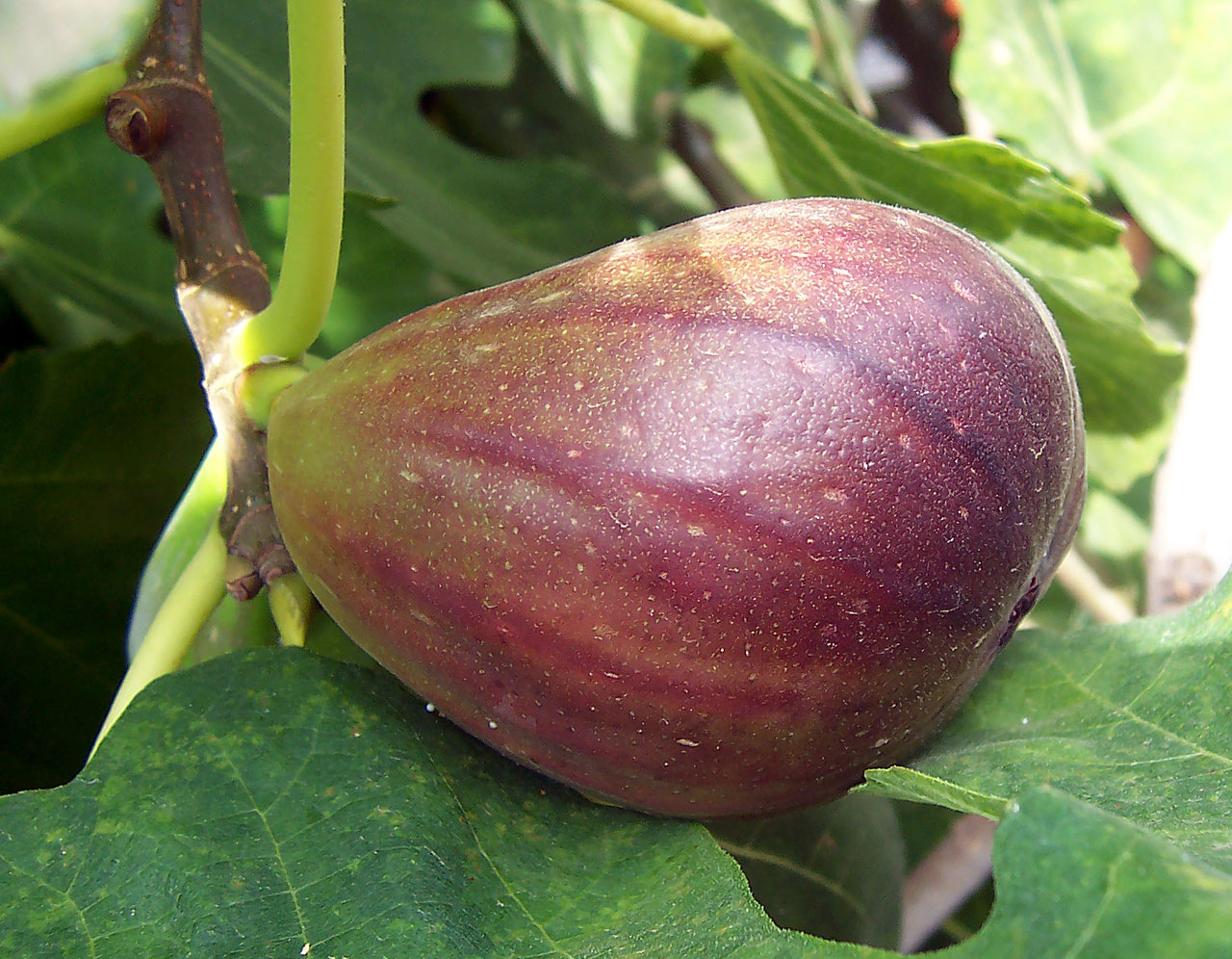
wikimedia
"The Fig says: If you guard the fig, you will eat of its fruit." (Proverbs 29:18)

Time is the tool and the object, the manner and the medium, for all endeavors of man and all human exertions that God desires. Man should apply himself, therefore, intentionally, at every moment of his life, and not waste a moment, especially his precious moments of youth, so that he should be able to merit and absorb all life’s goodness. His youth offers this gift more than any other time of life that God may grant, and the wise man discovers this all by examining the fig…

“Whatever you discover you are able to do, do it with all your might." (Ecclesiastes 9:10). That means: whatever you discover you are good atwhatever you can do to fulfill your calling, do, all the time you are in your might, that is, in the days of your youth. As it says in the Zohar:  “Lifnei seiva takum” [Don’t read this as saying: 'rise up before the elderly'. But rather, 'before you are old, rise up'.]

And we learn from the nature of the fig that they [figs] do not all ripen at the same time like other trees, but rather first this one then that one….  Each one in his time. And if the ripe one isn’t harvested in its time, it rots and is lost.  The owner of the fig tree must know the timing of his figs and be diligent every moment, for if he is distracted or delayed, the fruit will be lost.   

Thus, "guard" means to not turn aside from it for a moment; then you will eat it, and if not, not.

So too with the Torah [Judaism's sacred texts, traditions and knowledge]. If you don’t always attend to it in your heart, every moment… you won’t benefit from its fruits."


Time, that mysterious dimension through which all life flows, is indeed the precious medium of our lives. We dare not squander it, or our gifts and talents and passion. We needn't do everything at once. Indeed, our gifts don't ripen all at the same time. Thankfully! 

Each gift, each opportunity, tends to ripen in its own time. It is our job to nurture each and tend to each in its time so that we notice when it is ripening and capture it at its fullness and use it well.

The fig, so seems to teach Perek Shira, bids us to pay attention, be diligent, be patient, be measured, be grateful for the fruits of today and expectant for the fruits of tomorrow.

Tuesday, June 11, 2013

The Cost of Energy Consumption

For those motivated by money (which is most of us), knowing how much money the impact of our unsustainable behavior today is going to cost us tomorrow might boot us over into changing some of our behavior and what we expect and even demand from government and business.

(We still have the deferred action dilemma, that is, the fact that we humans respond more to the immediate than the deferred, especially an immediate gain vs a deferred loss. But we will tackle that later.)

David Roberts, a blogger for Grist, writes that the White House Office of Management and Budget just put out a stunning report that boosts the "social cost" of carbon by 60%. (That is, the amount of damage, in dollar-terms, that a ton of carbon emissions does.)

That is a huge deal. Here's why (in Roberts' words):

[I]f this number stays on the books — and if the government continues to update it based on the latest science — it will eventually worm its way deep into the regulatory apparatus and do something that no amount of argument and advocacy have been able to do: force the federal government to properly value the climate.
 One of the strongest arguments against more energetically promoting renewable energy and containing fracking etc is the economic argument. But if we can begin to understand, in real terms, that in fact it is uneconomical to persist in such destructive habits, and that by continuing business as usual we are ruining the business climate, perhaps, just perhaps, we will have the monetary and economic arguments we need to bolster our ethical and social justice arguments.

Wednesday, June 5, 2013

Not Buying from China

It is almost impossible not to buy things from China. From products to packaging to the component parts in the stuff of our lives, Chinese products are everywhere. Even when I purposely seek to avoid it, I can't. I recently bought a tea mug and intentionally looked all over the packaging for signs of where it was made. The only indication was the American company. But when I got home and opened the package, the bottom of the mug was stamped in those words that made my heart faint: Made in China.

We are all implicated in the tragic losses we are reading about all too often in Chinese factories.

The Chinese manufacturers we read about adulterate their products, be it food or material; pollute the environment; underpay and mistreat their workers (see yet the latest story below from The Sun), and we are the reason, the enablers and the beneficiaries of their unacceptable, unexcusable, and - if it were in this country - unlawful behavior. But they get to do it because we want cheaper merchandise.

How many Chinese manufacturers do this - we don't know. But clearly enough to have us read about them when grand things go terribly wrong (we don't hear about the wrongs that don't rise to this level of international reporting).

I for one will amp up my diligent avoidance of Chinese products. That is one way we can get the Chinese government to clean up its act toward its commerce, people and the environment.

Two other ways are legislation that requires incoming merchandise to abide by the same ethical standards in manufacturing as ours (that might make ours more competitive price-wise) and banding together with socially responsible shareholder or consumer groups that can magnify our voices and our clout.

If you know of such legislative efforts or organizations (ICCR - Interfaith Center on Corporate Responsibility), please let me know. I would love to publish such a list here.

Fire at locked poultry plant kills 119 in China
By Barbara Demick Tribune Newspapers
   BEIJING — There was a loud bang, survivors said. Then the lights went out, and fire quickly engulfed a poultry plant in northeastern China, killing at least119 workers who were trapped behind locked doors.
   The fire Monday, perhaps the deadliest in China’s poultry industry, erupted just past 6 a.m. in Dehui in Jilin province. Authorities said the explosion was caused by leakage in tanks of ammonia used in the poultry industry as a coolant.
   At least 54 people were injured in the explosion and blaze.
   As flames spread through the factory, panicked workers were unable to escape, survivors told state media, because most of the exits were locked or blocked, forcing them to stampede toward a narrow side door.
   “I knew the fire door was blocked, so I went back toward another part of the factory. Everybody was flooding in the same direction in a stampede. I was lucky to crawl out alive,’’ said Guo Yan, a 39-year-old woman who was interviewed by state media in a hospital in Changchun, the nearby provincial capital.
   Why there were not more exits is unclear.
   Whether processing food or making smart-phones, Chinese workers often endure conditions more akin to military barracks than factories, with restrictions on their freedom of movement.
   Guo told the Chinese news service that workers, who made about $325 per month, were “strictly controlled.”
   The fire was one in a string of international disasters that have spotlighted poor industrial safety, including the collapse of a garment factory building in Bangladesh in April, an accident that killed 1,127. Employees there had expressed fear that the building was unsafe but were ordered inside to work.
   Deadly industrial accidents have accompanied China’s rapid industrial growth in recent decades, despite government efforts to improve safety.
   Monday’s factory fire was one of the worst of its kind in China, eclipsing the toll from a 1993 blaze at a toy factory in the southern city of Shenzhen that killed 87 workers.

Sunday, June 2, 2013

Stormwater credits for Baltimore City

Friends, as you probably know, Baltimore City is one of ten Maryland jurisdictions that is required to create stormwater utility fees to help it manage and clean its water runoff. 

The Baltimore City Council will be voting on the City's new stormwater utility fee and credit structure  June 11. 

Advocates working for the improvement of our water system are turning to the faith community to help.

In one of their outreach pamphlets, they write:


People look to their house of worship for guidance in matters of ethics, conscience and service. Caring for the environment is a matter of faith. Religious institutions can take the lead by showing their support for this fair fee and also by working together to reduce polluted runoff from their properties through such actions as planting rain gardens, installing rain barrels and using pervious paving surfaces. Even in urban areas like Baltimore there are many opportunities for clean water projects.

If you support improving the health of our streams and making our communities safer and healthier, please contact your Baltimore City Council member before their June 11th meeting and tell them:

1) It’s time for Baltimore to take major steps to fix its inadequate stormwater system.
2) I support the utility fee on polluted stormwater runoff to pay for these urgently needed repairs.
3) The fee should be applied fairly across the board to all property owners.
4) The fee should have a credit that encourages property owners to take steps to reduce runoff from their properties; in doing so, they will improve the quality of our waterways and reduce the fee they pay.

To find your City Council representative, visit: http://cityservices.baltimorecity.gov/citycouncil/

I also have a flyer about credits that can be used to reduce your fees while improving the health of our waters, and our community. 

Email me at ncardin@comcast.net if you would like me to send that to you.

BJEN sees this as a wonderful opportunity to work with congregations who are ripe for improving their water management. Many of our congregations have land that could be enhanced, made more beautiful and ecologically productive, and  integrated into the congregation's purpose and programming. Outdoor chapels, meditative spaces, natural playgrounds, orchards and shaded areas can all enhance both the physical and programmatic elements of congregational life, and improve our community's water quality!  

Now, through credits and incentives, such transformations that were out of reach are suddenly more affordable.  In addition, more and more governmental and non-profit organizations are eager to partner with congregations to plant trees, put in raingardens and assist with other water retention initiatives. And they come with grant funding to help pay for the planning and the work.

This is a win/win. Our communities will be healthier, more efficient and productive in their use of natural resources and more beautiful. What could be better?