And with a click, it all came back on.
This time, BGE was prepared (thanks to the weather forecasters, the PSC and our elected officials pressuring them and enabling them to do better).
This time, we lost power for only 18 hours, unlike the last two storms when we lost power for 7 days - both times.
But what is astonishing to feel is how fragile this society is. We live by the click. We know it, intellectually, but we feel it in such storms. The time difference between that click when everything goes off and everything comes back on is millennial.
We become our ancestors, cast back into an era before the miracle of modern energy.
One estimate tells us that 1 barrel oil equals 25,000 hours of human labor or 12.5 years at 40 hours per week.
Only we are not as proficient as our ancestors in trimming candles or drawing water or cooking with fire. We are spread too far apart from each other, food sources, water sources, etc.
We no longer can remember how to entertain ourselves in the darkening hours of the day, or sit in faith with no knowledge of how our loved ones are doing.
We have gained so much with cheap energy. We cannot imagine doing without, or with having to pay too much for more.
Our 21st century challenge, for ourselves and our children, is to create a robust energy system that answers our most critical needs - physically, emotionally, economically, spiritually, culturally - without waste or greed.
This means change, perhaps radical change, and will require both technological advances, and spiritual exploration. And as scary and in some ways as difficult as that might be (think child-birth!), the thing is, we will be better off for the change.
I hope and pray that you all weathered the storm well with little to no water or structural damage, and no great upset if you lost your power (and I hope that it is back!).
Wednesday, October 31, 2012


Sunday, October 28, 2012
Waiting for Sandy
 It is dark and quiet and calm this early Sunday morning. The trees are still, a bird or two is calling out its morning claim, a gentle rain is falling. But turn on the Weather Channel and the frenzy reveals itself.
This is the last day to prepare for Hurricane Sandy. We are bringing in our trashcans, lawn furniture, extra solar lawn lights, wind chimes, potted plants, anything that can get blown around, away or through our windows.
We have filled up our water bottles and bathtubs (we are on well water; when the power goes out, so does our water); readied the wood we might need for our stove; have our batteries, crank flashlights and candles ready. We are eating down the inventory in our refrigerator and freezer, hoping to have as little as possible that can spoil. But this time, I also scanned the pantry to see how full our stock of non-perishables is. For this first time, I am a bit worried about having enough food.
This storm is being presented to us as a lot scarier than usual. Reaching a thousand miles across, with strong winds and an over-abundance of rain, it has the ability to wreak havoc over a huge swath of the north east. So it is not just your driveway or local street that might be impassable, not just your local stop lights that might be out. But the trains, the subways, large secondary roads - in other words, significant transportation systems may be disrupted.
This time around, the local restaurants and food stores may also be without power. This time around, it might not be just hundreds of thousands of homes and buildings without power and ready access to reliable transportation. (We are being urged to fill up our gas tanks for if the power outage is wide-spread, the gas pumps won't work.) It might be millions without the basics of electrical power and transportation, and all the life-giving benefits that electrical power and transportation give us.
We hope, of course, that doesn't happen. But this is the third major storm event in 14 months that has hit the mid-Atlantic area. And when you factor in the droughts in the mid-west; the major snows this past winter in the far west; the record high temperatures - you know the drill.
This might just be the new normal.
If it is, we need to radically re-think how we manage our power.
This is a significant reason to promote de-centralized, renewable energy. Beyond the argument of fossil fuels being the cause of climate change; beyond the politics of the economics of drilling and fracking and coal, we need to move away from depending on these large, centralized power plants if only to create more stable energy systems.
With the increase of so many energy-disruption incidents across the nation, we need to see energy production and distribution as a public health issue, as a national security issue (not just from outside invaders but from systems-security such as transportation, water, medicine, etc) and an economic issue.
Hurricane Sandy is going to cost billions of dollars, both in direct damage to infrastructure as well as disruption of daily affairs due to wide-spread power loss. So, for those folks who think that decentralizing the sources and distribution of our energy; putting wires underground; strengthening local food and manufacturing systems - in short making local economies more self-reliant thus ensuring that they are more resilient is detrimental to our national economic well-being, think again.
It is the continuation of our current mode of energy and business that will sink our nation's economy and threaten our personal well-being. Changing is the way to a secure and vibrant future. But the entrenched business interests will not make the change on their own. It is we, the people, who must lead the way.
Perhaps instead of lists like "Ten Easy Ways to Go Green," we need to create a list of the top ten ways we as individual consumers can collectively urge corporations to change the economic structure of contemporary society - moving from an outdated 20th century model that cannibalizes our earth to an innovative 21st century model that enriches it.
Friday, October 12, 2012
Drinking from a Yahrzeit Glass
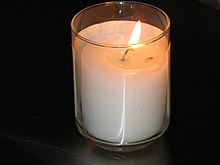
In the Reduce, Re-use, Recycle department, our grandmothers were masters at re-using. It never occurred to them to throw away perfectly good packaging once the product was used up, even if the product dipped into the realm of death.
Even more, back in those days, matched-set drinking glasses were given away as promotional items by gas stations, and jelly was sold in Flintstone patterned jars that could be used as drinking glasses when the jelly was all gone. Getting your drinking glasses for free and building your inventory one by one was a cultural norm.
Still and all, I found it creepy that all my friends' grandparents would drink their shot of morning juice out of a glass that commemorated the dead. Such a casual approach to the presence of death, this gentle, constant meal-time reminder of the fleeting nature of life, was something I found, well, macabre. Perhaps on Halloween, just for fun. And maybe, maybe Rosh Hashanah. But not the rest of the year.
Years later, when it sadly came my time to burn a yahrzeit candle, the kind I found in the stores mostly came in waxed cardboard containers. I didn't have to think about what to do with them once they were empty. I threw them away.
But this year, the candles on the store shelves were once again glass. So now I have a dilemma. What do I do with this perfectly serviceable carcass of a memorial candle?
Perhaps it is my age, perhaps it is all the memories held by that flickering light, perhaps my aversion to waste, but all of a sudden, I am thinking, hm, maybe, just maybe, I should keep and use this glass?
It is not so bad, after all, to be gently reminded of the fragility of life; not so bad to have daily reminders of all the people whose features you inherited, who filled your days and taught you life's most enduring lessons; not so bad to be nudged as you embark on your day's journey to think about the flickering legacy you want to leave when your time has come.
For now, the yahrzeit glass is in the dishwasher. I'm still not sure what I will do when I take it out.
Wednesday, October 10, 2012
Water and sukkot
If there were a new year for water, the holiday of Sukkot would be it.
It is the time of the turning of the seasons in Israel, from summer - the dry season, to winter - the wet season.
It is the time we recite plaintive prayers for rain - rain not just for our sake but for the sake of our ancestors who demonstrated their faithfulness through water, and for God's sake, who worked miracles for our ancestors through water.
Indeed the joyous holiday of Sukkot hosted the grandest extravaganza in ancient Israel's ritual repertoire: the Simchat Beit HaShoevah - the annual water pouring festival. Think Times Square on New Year's Eve, just in sandals on carved stones in the more balmy ancient Mediterranean night air.
We need such a celebration now. Something that reminds us of the preciousness of water; the ways we use it, revel in it, are soothed by it, depend upon it. We are, so they tell us, about 60% water ourselves.
But we also need to be taught about how we waste it. How our energy use consumes vast amounts of water; how fracking not only consumes but poisons millions of gallons of water; how mining by mountaintop removal should really be called mining by stream degradation and burial, affecting over 2000 miles of vital streams in the Appalachian region alone.
We need the blessings of abundant energy, yes. But we also need the blessings of abundant clean water. Yet the energy industry is exempt from the Clean Water Act both regarding valley fill and fracking processes.
We cannot continue to pit nature against itself; or put another way, to pit energy against the environment.
We can do several things.
(1) Continue to reduce our energy usage. It is good for our water and land, not just our air.
(2) Advocate to bring the energy industry under the clean water laws.
(3) Plant trees! It is amazing all the beneficial services that trees provide us, all at the same time, for a fraction of the cost of public works infrastructures. Not to mention the recreational, aesthetic and spiritual enjoyment too. Can't say that about a water treatment plant.
(4) Make BGE accountable for all the trees it is cutting. We need to have an accounting of how many trees it took down; the environmental impact; and how and where they are going to replace those trees. (Be sure to contact BGE for your tree replacement voucher if they took a large tree down on your property. And let's advocate for a complete tree replacement policy.)
(5) Manage our own lands well. Substitute our lawns with region friendly vegetation that won't make unusual water and pesticide demands; that will hold and filter our rainwater so it stays where it falls and becomes cleansed as it percolates; and plant fruit trees to boost commitment to caring for the trees and greater neighborhood resilience due to local food production.
And for a sweet English language treatment of our traditional prayer for rain, check out this video from the Jewish Farm School.
And if you are looking for a project for your shul or class, check out Tom Horton's great idea for citizen river stewards in this week's Sun paper.
Then, tell me about what you are doing.
It is the time of the turning of the seasons in Israel, from summer - the dry season, to winter - the wet season.
It is the time we recite plaintive prayers for rain - rain not just for our sake but for the sake of our ancestors who demonstrated their faithfulness through water, and for God's sake, who worked miracles for our ancestors through water.
Indeed the joyous holiday of Sukkot hosted the grandest extravaganza in ancient Israel's ritual repertoire: the Simchat Beit HaShoevah - the annual water pouring festival. Think Times Square on New Year's Eve, just in sandals on carved stones in the more balmy ancient Mediterranean night air.
We need such a celebration now. Something that reminds us of the preciousness of water; the ways we use it, revel in it, are soothed by it, depend upon it. We are, so they tell us, about 60% water ourselves.
But we also need to be taught about how we waste it. How our energy use consumes vast amounts of water; how fracking not only consumes but poisons millions of gallons of water; how mining by mountaintop removal should really be called mining by stream degradation and burial, affecting over 2000 miles of vital streams in the Appalachian region alone.
We need the blessings of abundant energy, yes. But we also need the blessings of abundant clean water. Yet the energy industry is exempt from the Clean Water Act both regarding valley fill and fracking processes.
We cannot continue to pit nature against itself; or put another way, to pit energy against the environment.
We can do several things.
(1) Continue to reduce our energy usage. It is good for our water and land, not just our air.
(2) Advocate to bring the energy industry under the clean water laws.
(3) Plant trees! It is amazing all the beneficial services that trees provide us, all at the same time, for a fraction of the cost of public works infrastructures. Not to mention the recreational, aesthetic and spiritual enjoyment too. Can't say that about a water treatment plant.
(4) Make BGE accountable for all the trees it is cutting. We need to have an accounting of how many trees it took down; the environmental impact; and how and where they are going to replace those trees. (Be sure to contact BGE for your tree replacement voucher if they took a large tree down on your property. And let's advocate for a complete tree replacement policy.)
(5) Manage our own lands well. Substitute our lawns with region friendly vegetation that won't make unusual water and pesticide demands; that will hold and filter our rainwater so it stays where it falls and becomes cleansed as it percolates; and plant fruit trees to boost commitment to caring for the trees and greater neighborhood resilience due to local food production.
And for a sweet English language treatment of our traditional prayer for rain, check out this video from the Jewish Farm School.
And if you are looking for a project for your shul or class, check out Tom Horton's great idea for citizen river stewards in this week's Sun paper.
Then, tell me about what you are doing.
Thursday, October 4, 2012
Eden Inside
If ever there were an opposite of Eden it would be the Wilderness - the desert of Sinai.
Eden is a world of lush greenery, radical abundance, food for the picking, a thousand-fold return for a modicum of work, good weather, beauty all around, unity of body and spirit in a bounded place.
Wilderness is barren landscape, scratchings of life, threat of hunger and thirst, soil that will not yield even with the greatest of toil, the fearsome vulnerability of boundlessness and exposure.
Yet all is not well in Eden and all is not bleak in the wilderness. For despite all the beauty and ease of Eden, it must have been a rather boring place. All was given - there was little to do beyond a bit of gardening. There were no questions for there was no questioning; no curiosity for there was no mystery. Ease yielded dullness. Which is why it couldn't last. In an endless world of boredom and dullness, life equals death. No wonder the snake, the slithering symbol of curiosity and knowledge, finally won the day.
Beyond Eden, though, is Wilderness. It demands alertness, creativity, living on the edge of survival and celebrating every success. It means struggle and disagreement, threats and vulnerability. But it just those things that yield the greatest rewards of vibrancy, achievement, pride in work and a sense of purpose.
So, the Torah tells us, humanity traded givenness and security for discovery and striving.
Still, trading ease for imagination and safety for exposure is not the kind of bargain most of us would choose. Which is where Sukkot comes in, mediating between these two extremes.
Wouldn't it be grand if there could be a melding of Eden and Wilderness: a bungee cord of sorts that holds us and retrieves us when we venture too far; a safety net that catches us when we fly too high; a pliable, porous spiritual skin that stretches as we grow, allowing us to touch and experience the world beyond ourselves without losing our own boundaries and the integrity that defines us.
Such is the symbol and meaning of the Sukkah.
Rabbinic tradition tells us that it doesn't matter what the sides of the sukkah are made of. They can be wood or stone, woven grass or the side of an elephant. For any and all of those represent the true walls, the walls of peace, the wings of God, the cloud of glory, that surround and protect us as we make our way through the wilderness of life.
The sukkah reminds us that though we cannot still be in Eden, Eden in some sense can still be with us. We cannot and will not give up the vulnerability of a vibrant, questing life, but, Sukkot wants to teach us, God's presence will wrap itself around us to escort us as we wander in the wilderness beyond. No wonder one of the main traditions of Sukkot is the mitzvah of hospitality. Included in this divine, mobile embrace are our ancestors, our tradition, our family, our friends. We do not travel through life alone.
Still, the sukkah is not impregnable. It is not bullet-proof or weather-proof or pain-proof. It is not all ease and abundance. It is, in short, not Eden. But it is the next best thing: a buffer that helps blunt the worst we must weather, a comforting cloak that envelops us as we move. And while we are asked to dwell in it only seven days, its presence travels with us wherever we go.
Eden is a world of lush greenery, radical abundance, food for the picking, a thousand-fold return for a modicum of work, good weather, beauty all around, unity of body and spirit in a bounded place.
Wilderness is barren landscape, scratchings of life, threat of hunger and thirst, soil that will not yield even with the greatest of toil, the fearsome vulnerability of boundlessness and exposure.
Yet all is not well in Eden and all is not bleak in the wilderness. For despite all the beauty and ease of Eden, it must have been a rather boring place. All was given - there was little to do beyond a bit of gardening. There were no questions for there was no questioning; no curiosity for there was no mystery. Ease yielded dullness. Which is why it couldn't last. In an endless world of boredom and dullness, life equals death. No wonder the snake, the slithering symbol of curiosity and knowledge, finally won the day.
Beyond Eden, though, is Wilderness. It demands alertness, creativity, living on the edge of survival and celebrating every success. It means struggle and disagreement, threats and vulnerability. But it just those things that yield the greatest rewards of vibrancy, achievement, pride in work and a sense of purpose.
So, the Torah tells us, humanity traded givenness and security for discovery and striving.
Still, trading ease for imagination and safety for exposure is not the kind of bargain most of us would choose. Which is where Sukkot comes in, mediating between these two extremes.
Wouldn't it be grand if there could be a melding of Eden and Wilderness: a bungee cord of sorts that holds us and retrieves us when we venture too far; a safety net that catches us when we fly too high; a pliable, porous spiritual skin that stretches as we grow, allowing us to touch and experience the world beyond ourselves without losing our own boundaries and the integrity that defines us.
Such is the symbol and meaning of the Sukkah.
“This is to be a lasting ordinance for the generations to
come;" Leviticus 23 tells us. "Celebrate it in the seventh month. Live
in booths for seven days: All citizens in Israel are to live in
such shelters so your descendants
will know that I had the Israelites live in booths when I brought
them out of Egypt. I am the Lord your God.”
Rabbinic tradition tells us that it doesn't matter what the sides of the sukkah are made of. They can be wood or stone, woven grass or the side of an elephant. For any and all of those represent the true walls, the walls of peace, the wings of God, the cloud of glory, that surround and protect us as we make our way through the wilderness of life.
The sukkah reminds us that though we cannot still be in Eden, Eden in some sense can still be with us. We cannot and will not give up the vulnerability of a vibrant, questing life, but, Sukkot wants to teach us, God's presence will wrap itself around us to escort us as we wander in the wilderness beyond. No wonder one of the main traditions of Sukkot is the mitzvah of hospitality. Included in this divine, mobile embrace are our ancestors, our tradition, our family, our friends. We do not travel through life alone.
Still, the sukkah is not impregnable. It is not bullet-proof or weather-proof or pain-proof. It is not all ease and abundance. It is, in short, not Eden. But it is the next best thing: a buffer that helps blunt the worst we must weather, a comforting cloak that envelops us as we move. And while we are asked to dwell in it only seven days, its presence travels with us wherever we go.
Subscribe to:
Comments (Atom)