(photo from World News Update)
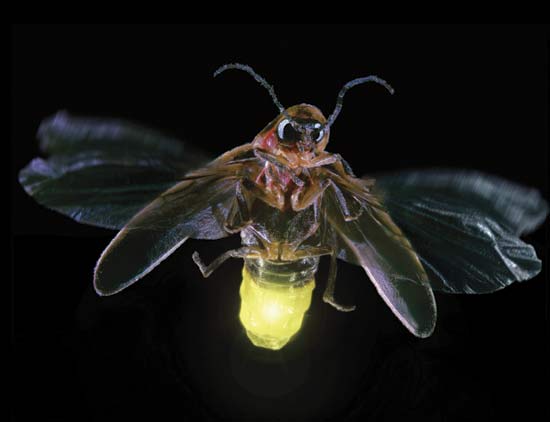
The first of the fireflies are here. They are the brave and hardy avant garde, canvassing the world from the soil to the tree tops, seeing how well we have fared since their last coming. Flashing their small beacons in the night, on and off, they signal to us an urgent message in Morse Code. I can imagine what they are saying:
"What have you done? This place is a mess! The Gulf is streaming out oil, force-feeding the bloated watery gut of your gluttonous world til you are sick with the very stuff you say you crave.
"The intractable tensions in the Middle East are becoming more, not less, complicated and intractable.
"The Miranda Ruling, the celebrated symbol of America's protection of the rights of the individual against potential abuse by the state for 40 years, has fallen. What are you people thinking?"
That's why I posted the photo of the guy at the top of this blog. I like his attitude. He seems pissed.
But fireflies also seem to symbolize hope - shining that little bit of light in the great expanse of darkness. So, as a nod to our little friends who both scold and encourage us, I share this lighthearted and useful bit of information I found recently, on one way to measure the value of trees.
This is very cool. Say you have a tree on your property, or on your congregation's property, or along your street or somewhere at work. One of the things you might want to do is figure out the value of such a tree. Not its board-feet value, but its environmental benefits, spelled out in monetary terms.
You can - by using a tree benefit calculator, courtesy of i-Trees.
Just go to http://www.trees.maryland.gov/calculator.asp (by clicking on the title of this blog) and you get whizzed to an on-line tree benefit calculator.
For example, I have a 3-foot diameter, majestic beech tree sitting just outside my house. To find out, roughly, just what this tree is doing for us, in addition to the aesthetic pleasure it gives, I type in my zip code, my kind of neighborhood, the tree type, its trunk size, and voila. Just like those old-fashioned fortune-telling robotic gypsies, this calculator spits out a formula that tells me all about the probable benefits of my tree.
I learn that my one beech tree will reduce atmospheric carbon by about 1,022 pounds a year, equivalent to almost one-tenth of my annual driving emissions and a little less than one plane ride's emission per passenger from here to Los Angeles.
It will intercept 14,565 gallons of stormwater runoff this year, keeping the tributaries and the bay cleaner.
It will conserve 351 Kilowatt hours of electricity I would otherwise use on cooling my home, absorb air pollutants and increase my property value. All in all, its monetary value in today's terms (not including the pleasure and spiritual benefits it gives me, or what I would get for the value of its wood) equals $371 per year.
But it gets even better. If I put in all my tulip poplars, I find that they yield overall benefits of $10,558 every year, not including the value of their wood!
While the calculator will be the first to tell you that this is not an exact science, it does help us roughly monetize the value of our trees. And for folks or businesses or congregations that need convincing that they should plant more trees, this can be somewhat persuasive.
For those of us, however, who are hopelessly enamored of trees, who just love being dwarfed by them, sheltered in their midst, shielded under their canopy, and comforted by their strength, they are, of course, priceless, no matter what their value.